
The Dallas–Fort Worth metroplex is not one city — it’s three, plus a sports town between them. Dallas and Fort Worth are about 50 kilometers apart, run by different city governments, and feel like genuinely different places. Arlington sits between them. For most visitors, the first decision isn’t which sight to see; it’s which city to use as a base, and how to handle the cross-metroplex travel that any wider trip will require.
Almost every visitor underestimates two things: the distance between Dallas and Fort Worth, and how aggressive the Texas summer actually is.
The metroplex is three cities and a sports town
The phrase “Dallas–Fort Worth” describes a region of about 8 million people across two anchor cities and dozens of suburbs. For a traveler, the practical breakdown is simpler:
- Dallas — the larger, denser, more polished city. Better food, more nightlife, more museums.
- Fort Worth — the older, more relaxed, more identifiably “Texas” city. Stockyards, cowboy culture, a strong art museum district, calmer streets.
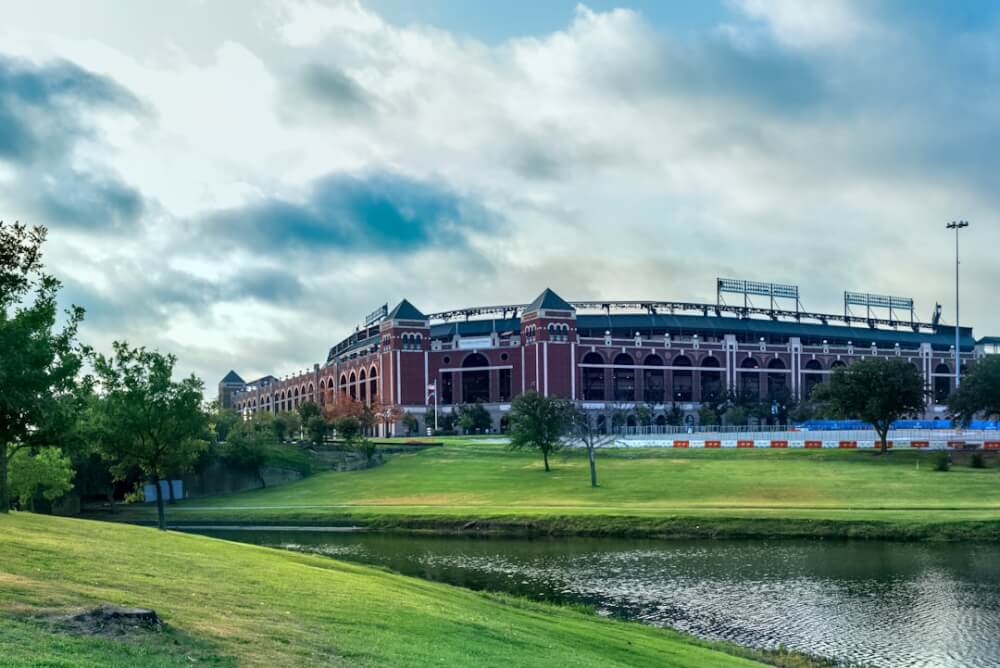
- Arlington — the suburb between them, home to AT&T Stadium, Globe Life Field (where the Texas Rangers play), Six Flags, and not much else of interest to non-sports travelers.
Trying to “do” all three in a short trip means a lot of car time. Most first-time visitors pick Dallas as the base and treat Fort Worth as a half-day or full-day side trip. For a longer or sports-focused trip, splitting nights between the two works well.
Picking a base: five areas, five different versions of the trip
A short list covers most travelers. The differences here are sharper than they look on a map — Dallas neighborhoods sit far enough apart that the choice meaningfully shapes the trip.
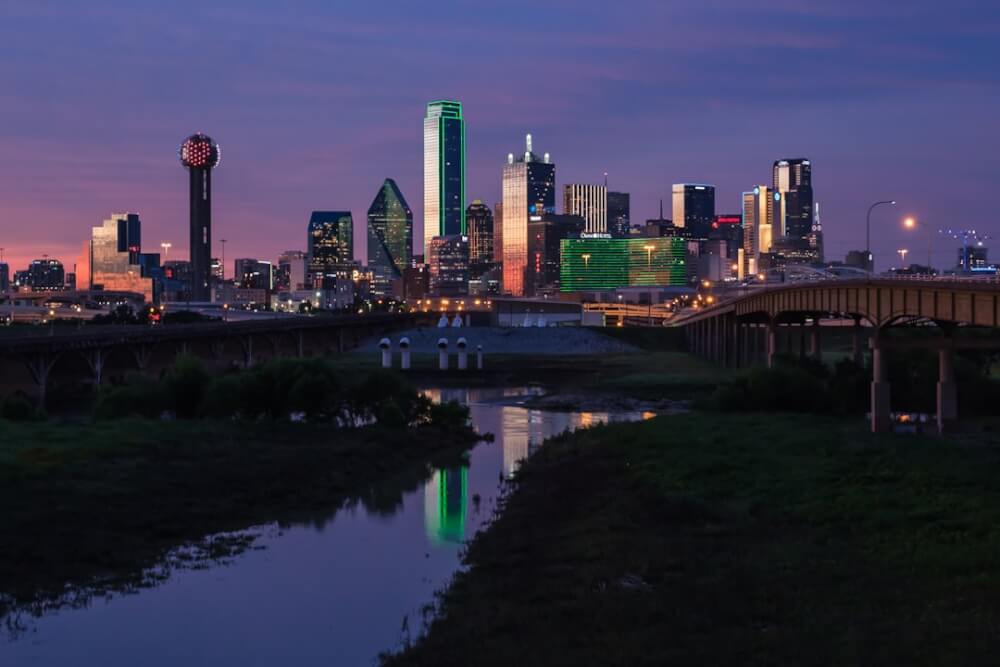
Downtown Dallas — The easiest base for a short visit. Walkable to Dealey Plaza, the Sixth Floor Museum, the Dallas Museum of Art, and Klyde Warren Park; DART rail access in every direction, including the Trinity Railway Express (TRE) to Fort Worth. Hotels skew business-traveler clean rather than character-rich, but the location does the work. Strong base for a first-time trip that pairs a Dallas museum day with a Fort Worth side trip.
Uptown Dallas — A short ride north of Downtown, with denser dining, walkable evenings, and the McKinney Avenue trolley running through it. Better food per dollar than Downtown, more of a neighborhood feel, and still connected to DART. Tradeoff: pricier than Downtown, less direct transit access to the TRE. Choose Uptown for a second visit or a trip where evenings matter more than museums.
Deep Ellum — Dallas’s music and street-art neighborhood, just east of Downtown. Murals, live venues, late dinners, and a slightly grittier energy. Best for a younger, music-focused trip; not great if you want a quiet hotel night. The neighborhood empties out during the day and fills up after 6 p.m.
Bishop Arts (Oak Cliff) — A small, walkable, independent-shop neighborhood south of Downtown. Cafés, restaurants, boutiques, and a slower pace than anywhere else in central Dallas. Tradeoff: limited hotel options, and the further distance from DART means most cross-town trips are by Uber. Strong choice for travelers who want a calmer base and don’t mind the rideshare cost.
Downtown Fort Worth (Sundance Square area) — The Fort Worth alternative. Walkable, well-restored, with the Stockyards historic district to the north and the Cultural District (with the Kimbell, the Modern, the Amon Carter museums) to the west. A different city, not just a different neighborhood. Direct TRE rail access to Dallas in under an hour. Strong base for travelers who want a quieter Texas trip with easier access to Fort Worth’s specific draws.
Getting around when nothing is close to anything else
The metroplex was built for cars. Visitors who try to do it entirely without one usually succeed, but it takes more planning than in LA or Miami.
DART rail. Dallas Area Rapid Transit’s light rail system covers Downtown, Uptown, Deep Ellum, Fair Park, the suburbs to the north, and the airport (DFW) via the Orange Line. Useful for most Dallas-internal trips. Fares run a few dollars; download the GoPass app for tickets and route planning.
Trinity Railway Express (TRE). The commuter rail connecting Downtown Dallas’s Union Station and Victory Station to Downtown Fort Worth via a stop at Centreport. Travel time Dallas–Fort Worth is about 65 minutes. The main piece of transit infrastructure that makes a no-car DFW trip possible.
McKinney Avenue Trolley. A free historic trolley that loops through Uptown Dallas. Useful inside that neighborhood, useless beyond it.
Rideshare. Common, affordable, and the default for cross-neighborhood trips outside DART’s reach. Bishop Arts, the further suburbs, and any night-time trip from Deep Ellum back to Downtown all work best by Uber or Lyft.
Walking. Real inside Downtown Dallas, Uptown, Deep Ellum (after dark), and Bishop Arts. Real inside Downtown Fort Worth and the Stockyards. Crossing between these areas is a transit or car trip.
Driving. The default for most non-tourist visitors. Parking in Downtown Dallas is plentiful but not free; Fort Worth is easier. Highways are wide, fast, and unforgiving for visitors used to dense city driving — give yourself buffer for navigation mistakes, especially around the High Five Interchange.
A reasonable mix for a no-car first trip: DART for most Dallas days, TRE for the Fort Worth day, Uber for evenings.
The Texas summer as a real constraint
This is the planning detail Miami and Mexico City visitors think they understand and then walk straight into anyway.
June through September daily highs in DFW often run 32–38°C (90–100°F), with stretches above 38°C in late June and July. The humidity is lower than Florida’s, but the dry heat is more punishing than people expect — sweat evaporates so fast it feels like the heat doesn’t register until dehydration does. UV is high; sunburn happens faster than the calendar suggests.
What this means for planning:
- Outdoor activities go in the early morning or after 7 p.m. That’s when the Stockyards walk, the Klyde Warren Park visit, the Bishop Arts evening, and the Trinity River trails work.
- Mid-day is for indoor things. Museums, food halls, the Sixth Floor Museum, the Kimbell. Walk between them only in short stretches.
- Water is non-optional. Carry water everywhere. Restaurants and museums refill bottles. The dry air means dehydration creeps up before you feel thirsty.
- Air-conditioned breaks every 60–90 minutes outside. Texas restaurants and shops are built for this; use them.
- Afternoon thunderstorms happen but are less reliable than in Miami. When they come they’re often brief and intense. Light rain gear is useful, but the heat is the bigger issue.
A loose five-day shape that works
This is a rhythm, not a checklist. It spreads heat-heavy days across recovery days so the week doesn’t compress.
- Day 1 (arrival): Land at DFW, settle into the base. Light neighborhood walk in the late afternoon, dinner without an ambitious plan.
- Day 2 (Dallas museums + Downtown): Sixth Floor Museum, Dallas Museum of Art, Klyde Warren Park, lunch in Uptown. Treat midday as indoor.
- Day 3 (Fort Worth): TRE ride to Fort Worth for the Stockyards morning, Cultural District museums, and a Sundance Square dinner.
- Day 4 (Deep Ellum or Bishop Arts): Evening neighborhood night — murals, live music, slow dinner.
- Day 5 (Fair Park or longer day out): Fair Park, Reunion Tower, a Bishop Arts return, or an early start for a Hill Country / Austin extension.
For a longer trip, the easy add-ons are Austin (3 hours south by car, real city in its own right), a Hill Country day (vineyards, BBQ, smaller towns), or a slower second base in Fort Worth.
What disappoints first-time visitors
The honest list:
- The metroplex is bigger than it looks. Driving Dallas to Fort Worth on a Friday afternoon can be a 90-minute trip. Plan around it.
- Walking-only days are scarce. A few areas (Downtown Dallas, Uptown, Downtown Fort Worth) are properly walkable; most of the metroplex isn’t.
- The heat is more aggressive than guidebooks suggest. Schedule like Miami or Mexico City — outdoor at the edges of the day, indoor in the middle.
- Public transit is real but limited. DART covers the central neighborhoods well; the metroplex’s edges (Plano, Frisco, McKinney) much less so.
- Highway driving is fast. Six lanes at 75 mph is normal. Visitors used to slower urban driving should give themselves buffer for missed exits and merging.
None of this makes DFW a bad trip. It makes it a trip that rewards picking a base, accepting the metroplex distances, and planning around the heat rather than ignoring it.
Visiting during the 2026 FIFA World Cup? AT&T Stadium in Arlington hosts nine matches between June 14 and July 14, including a semifinal — more than any other US venue. The match-day logistics (the TRE-plus-shuttle combination, the Fair Park Fan Festival, and where to base on multi-match trips) sit in a separate piece: AT&T Stadium, the Semifinal, and a 2026 World Cup Match Day in Arlington.