
Los Angeles rewards travelers who pick a clear base and accept that they will not see all of it in one trip. The metro area stretches more than 80 kilometers from the coast to the mountains, and the difference between a good LA week and a frustrating one is usually decided before the plane even lands. The question isn’t which sights to do — it’s where to sleep, how to move, and which days to leave loose.
LA is a region, not a city
The thing that catches first-time visitors out is the scale. Driving from Santa Monica to Pasadena at 6 p.m. on a weekday can take 90 minutes. The Hollywood sign and Disneyland are roughly 50 kilometers apart. Trying to “see LA” the way you might see Lisbon or Boston — one walkable core, one or two day trips — collapses almost immediately into highway time.
The version of the trip that works is the one where the days mostly stay within a 20–30 minute radius of where you’re staying. That radius is the actual planning unit. Cross-town visits happen, but you plan one per day, not three.
This is also why the answer to “is LA worth it?” depends entirely on the base. A traveler who stays in Santa Monica and never leaves the Westside is having a different vacation than one who stays in Hollywood and never leaves the central corridor. Both are real LA trips. Neither is the whole picture.
Picking a base: five neighborhoods, five trips
A short list of areas covers most first-time and second-time visitors. The differences between them are bigger than they look on a map.
Santa Monica and the Westside (Venice, Marina del Rey) — Beach, ocean air, walkable promenades, easy access to LAX. The Expo line connects Santa Monica to downtown without a car, which is rare in LA. The tradeoff: it’s a long drive to Hollywood, Pasadena, or anywhere east. Choose this if your trip is mostly coast, food, and shorter cross-town days.
West Hollywood and the Mid-City corridor — The most balanced base for a first visit. Reasonable distance to Beverly Hills, Hollywood, Beverly Grove, the museums on Wilshire, and the eastward neighborhoods. Walkable in pockets, but you still need rides for most days.
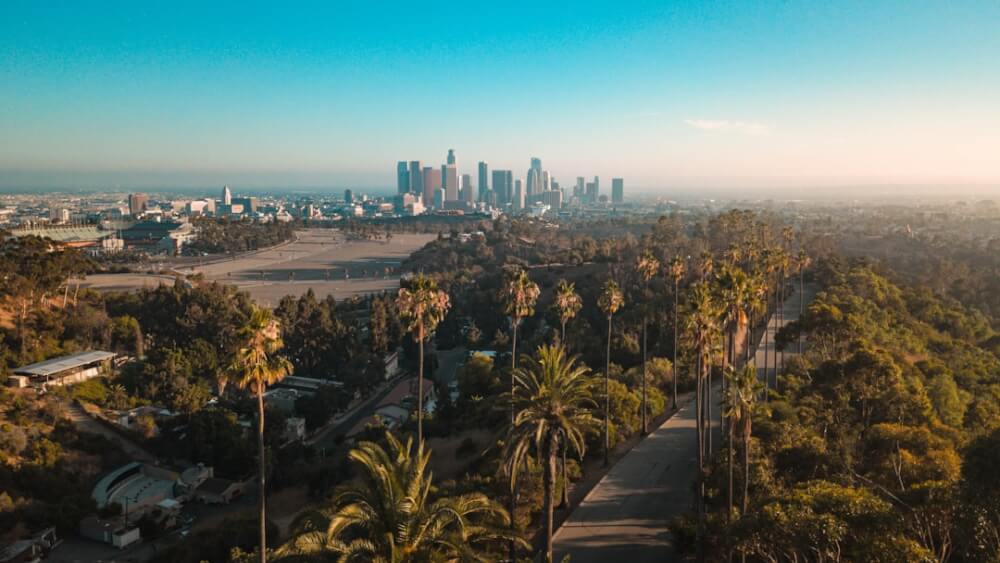
Hollywood and Los Feliz — Closer to Griffith Park, the observatory, Thai Town, and Echo Park. The classic “LA images” trip — Walk of Fame, hillside views, palm tree streets — fits naturally from here. Cheaper than the Westside on average. Some blocks feel rougher than the tourist photos suggest; pick the hotel street carefully.
Downtown LA (DTLA) — Underrated for an urban-feeling trip. Grand Central Market, Arts District, museums, and Metro access to the rest of the region. Quieter on weekends than visitors expect; nightlife is more pocketed than continuous. Strong base if you want to use Metro instead of cars.
Pasadena and the eastern arc — A quieter, leafier alternative. Old Town Pasadena is walkable, the Huntington and Norton Simon are excellent, and there’s a real city core that LA mostly lacks elsewhere. The cost: long trips back west to the beach or to Hollywood. Choose this for a calmer second visit, or if Caltech, JPL, or the Rose Bowl are on the list.
Getting around without losing half your day
Most LA visitors assume they need a car. Most LA visitors who actually try Metro for a few days come back surprised at how much of the trip it covers.
The honest version: a car gives you the most freedom and the most stress. Parking is expensive in the dense areas, traffic shapes every decision after 3 p.m., and the cognitive load of LA driving — six-lane surface streets, aggressive lane changes, freeway merges — wears people out by day three. Rideshare splits the difference but adds up fast for multi-day trips.
Metro is genuinely useful if your base is along one of the lines. The Expo Line connects Santa Monica to Downtown LA in about 50 minutes. The B Line (formerly Red Line) covers Hollywood, Universal City, and North Hollywood. The K Line runs through Inglewood and connects to LAX via the LAX/Metro Transit Center. Fares start at $1.75 on LA Metro, and a TAP card covers all of it.
A reasonable mixed strategy for a first trip:
- Use Metro or walk for trips within your base neighborhood
- Use rideshare for cross-town evenings and night returns
- Rent a car for one or two specific days when you want to explore further out (Malibu, the Valley, Pasadena, day trips to Joshua Tree or Big Bear)
Skipping the rental car entirely is realistic for a 4–6 day trip if your base is well-placed.
Summer in LA: the marine layer, the inland heat, and what the season actually feels like
LA summers are not as predictable as the postcards suggest. The coast — Santa Monica, Venice, Marina del Rey — often sits under a low gray cloud layer until late morning (locals call it “June Gloom” when it stretches into the early summer). It typically burns off by noon, but cool, overcast mornings at the beach are common in June.
Inland is the opposite. Downtown LA, Pasadena, the Valley, and Inglewood can sit 8–12°C warmer than the beach on the same afternoon. Mid-July is when this peaks. A 23°C morning in Santa Monica can be a 35°C afternoon in Burbank.
What this means for planning:
- Schedule outdoor and beach time for late morning through mid-afternoon
- Move museums, food halls, and indoor stops to mid-day if you’re inland
- Build at least one rest afternoon into the week — LA tires people out more than its weather suggests
- Pack for both a foggy 18°C coast morning and a hot 32°C inland afternoon, sometimes on the same day
A loose five-day shape that works
This isn’t a rigid itinerary. It’s the shape that consistently produces a good first LA week without overscheduling.
- Day 1 (arrival): Land, settle into the base, beach or neighborhood walk, low-effort dinner near the hotel
- Day 2 (your base): Stay within 20–30 minutes of the hotel — beach day if Westside, Hollywood/Griffith if central, museums and food halls if downtown
- Day 3 (one big cross-town day): Pick one — Getty Center, Griffith Observatory, Downtown food crawl, Disneyland, Universal — and treat it as the whole day, not a half-day
- Day 4 (rest + neighborhood detail): Slower morning, second neighborhood you haven’t seen, sunset view (Griffith, Santa Monica Pier, or downtown rooftop)
- Day 5 (side trip or longer day out): Malibu, Long Beach, Pasadena, or a Disneyland day; keep the evening near base
For a longer trip, repeat the “one cross-town day → rest day” pattern. The mistake is stacking three cross-town days in a row.
What disappoints first-time visitors
The honest list, since most LA guides leave it out:
- Distances eat the week. Plan fewer things, further apart. Half-day routes that look fine on a map are full-day routes in practice.
- The “iconic” downtown core is not central. Most LA life happens in the spread-out neighborhoods. Downtown is a destination, not a default.
- Beach weather is not always summer weather. Bring a long-sleeve layer for coast mornings even in July.
- Restaurant booking matters more than you’d think. The best LA food often requires reservations one to two weeks ahead, even mid-week.
- Walking-only days are limited. A few neighborhoods (Santa Monica’s downtown, Old Pasadena, Abbot Kinney in Venice, parts of West Hollywood) are properly walkable; most of the city isn’t.
None of this makes LA a bad trip. It makes it a different kind of trip — one that rewards picking a base, slowing the schedule, and using the days you do have on fewer, longer experiences.
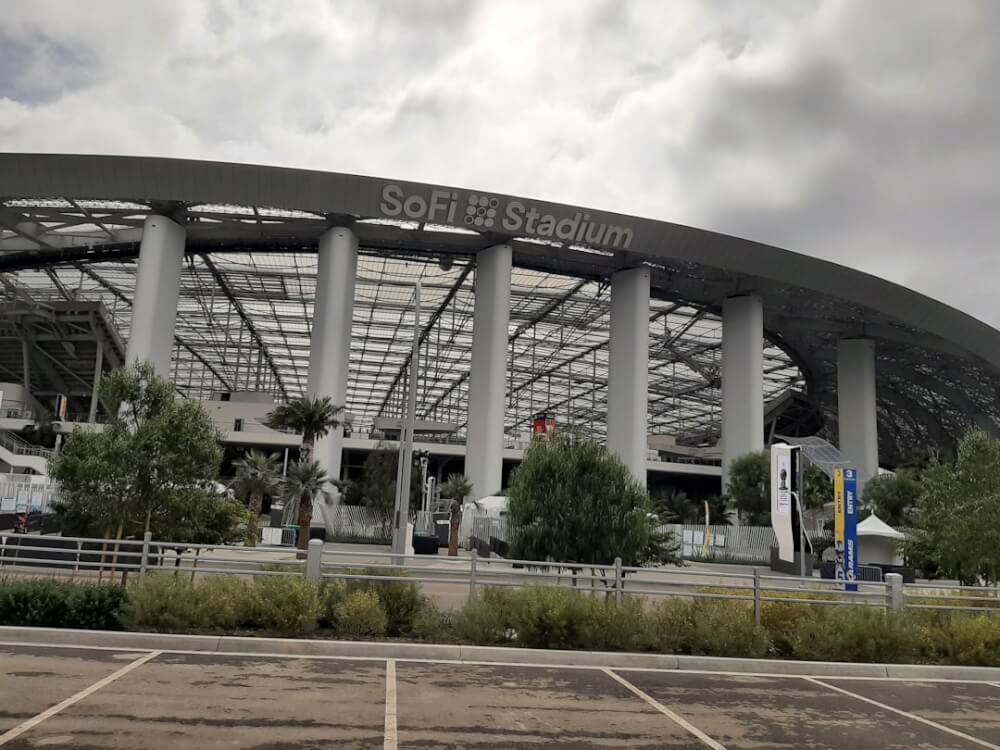
Visiting during the 2026 FIFA World Cup? SoFi Stadium in Inglewood hosts eight matches between June 12 and July 10. The match-day logistics — transit routes, Fan Festival location, whether to base in Inglewood — sit in a separate piece: Getting to SoFi Stadium for the 2026 World Cup.