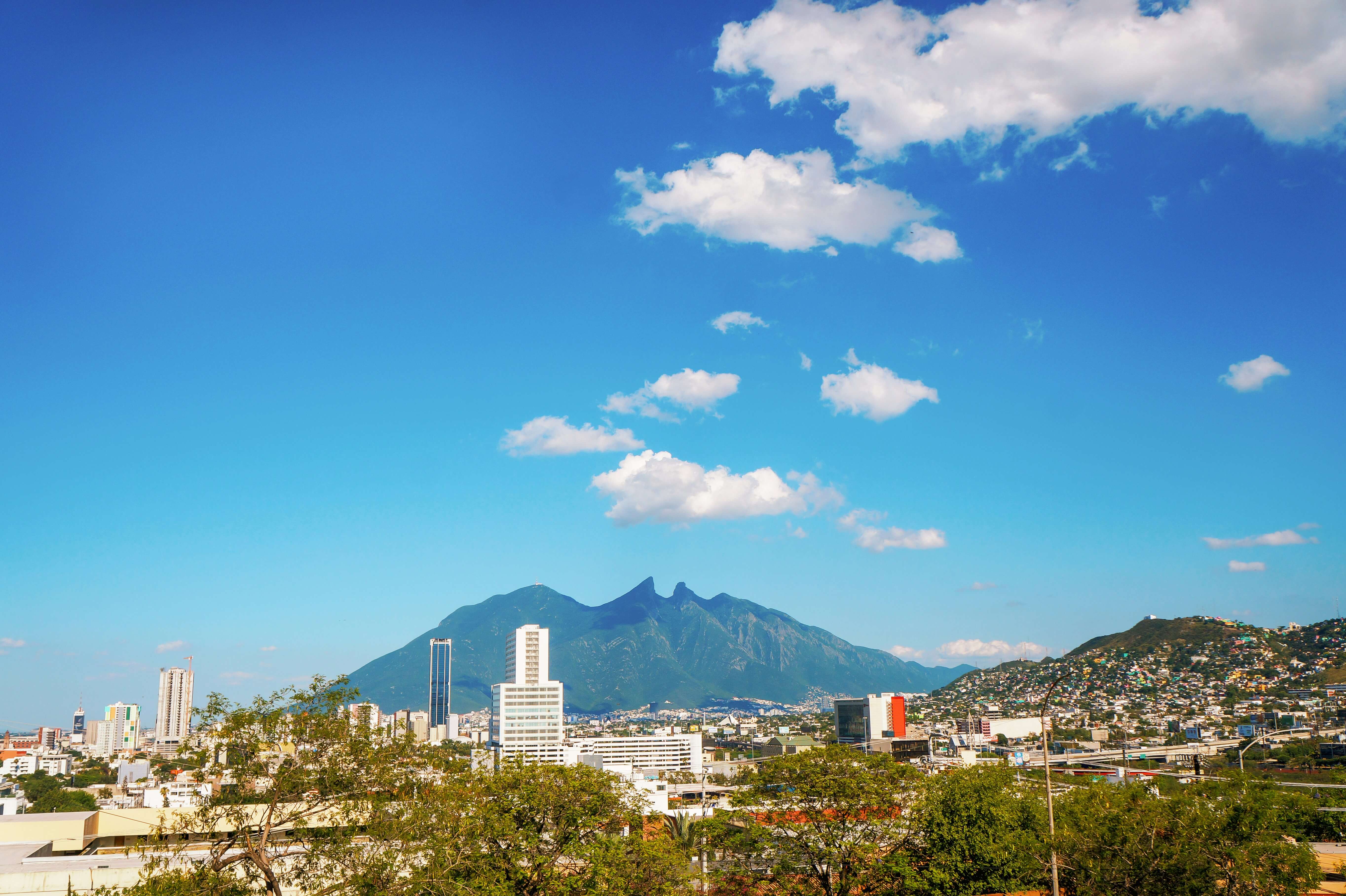

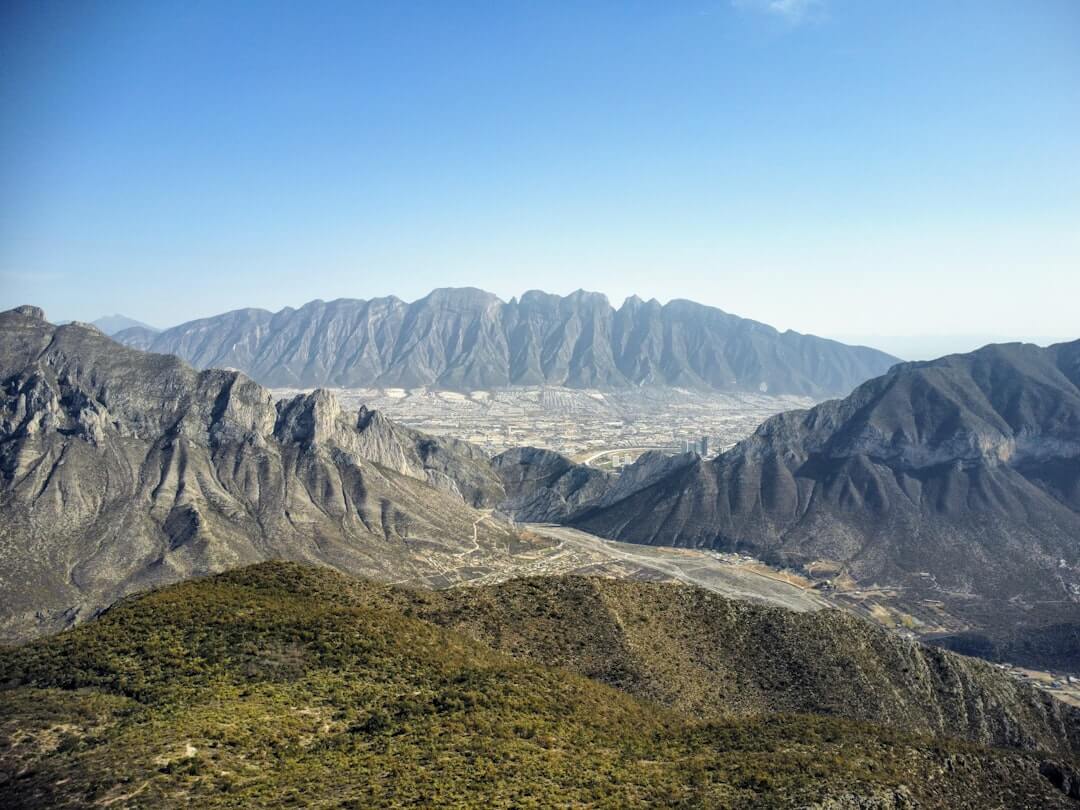
Monterrey doesn’t read like the rest of Mexico. It’s wealthier, more industrial, more visibly mountainous, and built around a small walkable core surrounded by suburbs that locals genuinely prefer to live in. The Cerro de la Silla (Saddle Mountain) frames the skyline from almost every angle, and a good trip here moves between the walkable historic center, the upscale San Pedro Garza García side, and one full day in the mountains. Monterrey is one of Mexico’s most underrated city visits — a strong food scene, a real mountain backdrop, easier US-style infrastructure than most of the country, and a downtown that’s far smaller than Mexico City’s.
Monterrey is a small walkable city with a big metro around it
The thing first-time visitors realize quickly: the walkable Monterrey is genuinely compact. The Macroplaza — one of the largest urban plazas in the world — runs through the historic center, with the Catedral, Palacio de Gobierno, MARCO contemporary art museum, and a 60-meter-tall Faro del Comercio sculpture all within a few blocks. Barrio Antiguo, the historic colonial-era neighborhood, sits adjacent. Most of central Monterrey worth visiting fits inside a 2 km square.
Outside that walkable core, the metro is huge — about 5.5 million people — and dominated by suburbs. The most relevant for visitors:
- San Pedro Garza García — adjacent municipality southwest of Monterrey, the wealthiest in Latin America, with restaurants, shopping (Calzada del Valle), and the city’s best evening scene
- Guadalupe — eastern adjacent municipality where Estadio BBVA sits
- Santa Catarina — western, gateway to the Sierra Madre canyons (Chipinque, Huasteca)
The version of the trip that works picks Centro / Barrio Antiguo for walkability OR San Pedro for upscale ease, then treats the mountains as a dedicated day.
Picking a base: three areas, three different versions of the trip
Centro Monterrey — The default first-time base for walkability. Walking distance to the Macroplaza, MARCO, Mercado Juárez, the Faro del Comercio, and Barrio Antiguo’s nightlife. Metrorrey at multiple stations. Hotel options skew business-traveler. Tradeoff: some streets empty out at night, and the downtown isn’t where locals choose to live. Strong base for a first trip focused on the museums, plaza, and historic neighborhoods.
Barrio Antiguo — A historic neighborhood adjacent to the Macroplaza, with cobblestone streets, colonial architecture, and the city’s densest evening bar and live-music scene. Boutique hotel options. Tradeoff: gets loud Friday-Saturday until late. Strong choice for travelers who want evening character.
San Pedro Garza García — Latin America’s wealthiest municipality, with upscale restaurants, shopping, and a noticeably safer-feeling environment than the central neighborhoods. Hotels skew higher-end. Tradeoff: less of “Monterrey” character — you’re staying in a polished business district. You’ll Uber for downtown trips. Strong choice for travelers who want comfort, evening dining quality, and easier mountain access (Chipinque is close).
Guadalupe is the stadium municipality but isn’t a base for sightseeing — it’s mostly suburban and lacks restaurants of the central districts’ quality.
Getting around: Metrorrey, Uber, and walking inside the core
Monterrey’s transit is functional, with the Metrorrey light rail covering specific corridors that matter for visitors.
Metrorrey. Two light-rail lines (Line 1 east-west, Line 2 north-south). Line 2’s Parque Fundidora station is the key stop for visitors during the 2026 World Cup — it’s at the Fan Festival entrance. Fare is around 6 pesos.
Uber. The default for cross-city trips. Inexpensive by US standards. From Centro to San Pedro: 80–150 pesos ($5–9 USD). From Centro to Estadio BBVA in Guadalupe: 150–300 pesos.
Metrobús. A few BRT lines covering specific corridors. Useful for specific trips, less generally relevant.
Walking. Real inside Centro / Barrio Antiguo, real inside parts of San Pedro (especially Calzada del Valle). Walking between districts mostly isn’t.
Driving. Renting a car is more common in Monterrey than in Mexico City — the city is car-friendly, parking is generally available, and the highway access to the mountains is easy. Useful for the mountain day. Not necessary for a Centro-based trip.
A reasonable mix: Metrorrey for the Fan Festival and Estadio BBVA via park-and-ride, Uber for cross-city evenings, walking inside the base neighborhood, optional car rental for a Sierra Madre day.
Summer in Monterrey: hot, dry, and dramatic
Monterrey sits in the Chihuahuan desert and runs hotter than central or southern Mexico. June through August daily highs run 30–38°C (mid-80s to 100°F) with low-to-moderate humidity. The dry heat is more punishing than the temperature suggests; UV is intense.
Afternoon thunderstorms happen but are less reliable than in Mexico City. When they come they’re brief and dramatic.
What this means for planning:
- Outdoor time sits in the morning (before 11 a.m.) or evening (after 6 p.m.)
- The Macroplaza, Fundidora Park, and outdoor sights work best early
- Mountains stay cooler — Chipinque can run 5–8°C below the city, and Huasteca Canyon is a real respite from the heat
- Pack like a desert trip: hat, sunscreen, water bottles, light breathable layers
- Hydrate aggressively — the dry air pulls water out faster than visitors expect
A loose three-day shape that works
This is the rhythm that produces a good first Monterrey trip.
- Day 1 (arrival): Land at MTY (about 25–35 minutes from Centro by Uber), settle into the base. Evening walk in Barrio Antiguo or San Pedro, dinner at a regional restaurant (cabrito is the local specialty).
- Day 2 (Centro + Barrio Antiguo): Macroplaza, MARCO contemporary art museum, lunch in Barrio Antiguo, afternoon in Fundidora Park (the old steel mill turned cultural complex), evening at a Barrio Antiguo bar.
- Day 3 (mountains): Chipinque or Huasteca Canyon for the morning, lunch back in San Pedro, slower evening.
For longer trips, the easy add-ons are Saltillo (1 hour west, the Coahuila state capital), Cola de Caballo waterfall (1 hour south, a half-day hike), or a full day at Huasteca Canyon for rock climbing and hiking.
What disappoints first-time visitors
The honest list:
- The summer heat is intense. Underestimating it is the most common Monterrey mistake. Schedule like Houston in August.
- The downtown isn’t where locals socialize. Most regional Mexicans live and eat in San Pedro or the suburbs. Travelers focused on “where locals are” may need to follow them out.
- Some downtown blocks feel sketchy at night. Centro is fine during the day; for late nights, San Pedro is calmer.
- Air quality varies. Industrial Monterrey has occasional bad-air days. Check the forecast in summer.
- Cabrito (roasted goat) is the local specialty and is genuinely good but requires knowing where — El Rey del Cabrito and El Gran Pastor are the well-known places.
- Spanish is mostly required. Less English than in Mexico City or Guadalajara — Spanish-only menus and signage are common.
None of this makes Monterrey a bad trip. It makes it a city that rewards a slightly higher tolerance for heat, a clear sense of which neighborhood matches the trip’s pace, and one full day on the mountains that frame the city.
Visiting during the 2026 FIFA World Cup? Estadio BBVA in Guadalupe hosts four matches, including the 1,000th match in World Cup history (Tunisia vs Japan, June 20). Notably, Monterrey is the only Mexican host city without a Mexico match. The match-day logistics, the Parque Fundidora Fan Festival, and the Metrorrey route sit in a separate piece: The 1,000th World Cup Match: Estadio BBVA and the Monterrey Tournament.