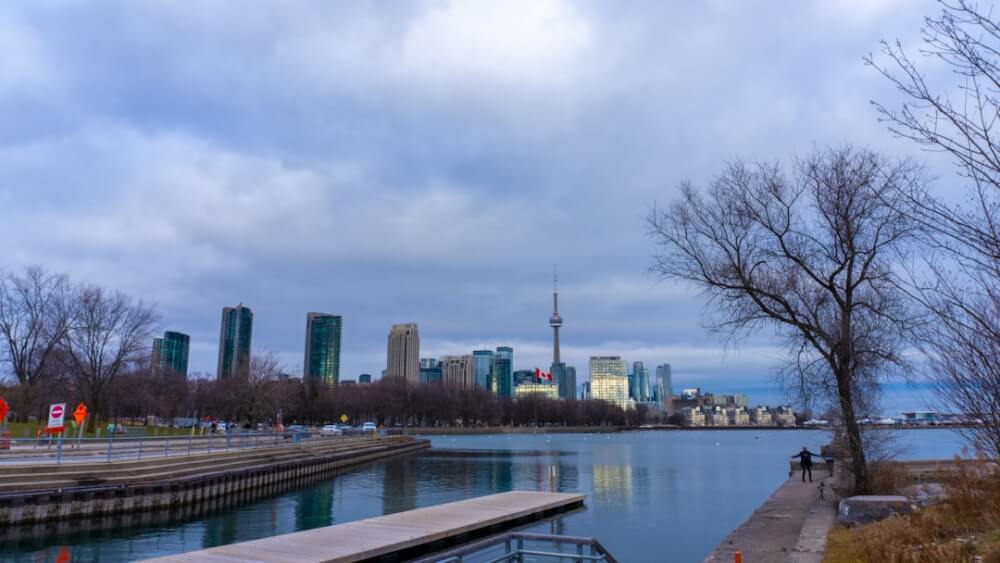

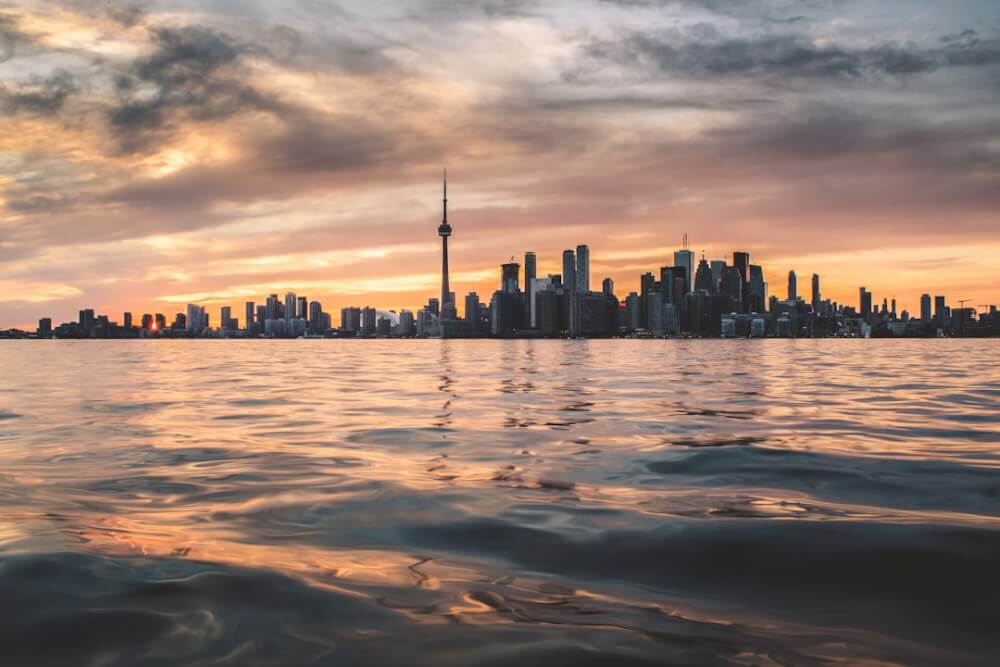
Toronto isn’t a skyline-and-tower kind of trip. The CN Tower is a fine 90-minute visit, but the city itself happens at street level — in neighborhoods stitched together by a streetcar network that most North American cities long ago abandoned. The interesting Toronto is in Queen West, Kensington Market, the Distillery District, and the lakefront. A good week here treats the 504 King and the 511 Bathurst as routes through the city, not novelties.
Toronto is a city of neighborhoods, not a downtown
Most first-time visitors anchor on the CN Tower, the Eaton Centre, and the Financial District — and find them slightly underwhelming. That’s because downtown Toronto is mostly a daytime business district. The city’s character lives elsewhere: in the side streets a streetcar ride west or east of the core, where the restaurants, bars, markets, and walkable blocks actually are.
Where the city actually lives:
- Queen West and West Queen West — bars, restaurants, indie shops, the Drake and Gladstone hotels
- Kensington Market — Caribbean groceries, taquerias, secondhand stores, Victorian houses converted into businesses
- The Distillery District — cobblestoned, pedestrian-only, Victorian industrial buildings repurposed as galleries and cafés
- The Annex and Yorkville — bookstores and bagels at the south edge, designer shopping at the north
- Leslieville and Riverside (east) — quieter, café-driven, a slower city rhythm
- Liberty Village (west) — modern condos, restaurants, adjacent to Exhibition Place and the waterfront
- The Harbourfront and Toronto Islands — water access, summer ferries, a different city scale
Pick one of these as a base and the trip works. Anchor on the financial district and the convention hotels, and it usually doesn’t.
Picking a base: five areas, five different versions of the trip
Downtown / King West / Entertainment District — The default first-time base. Walking distance to the CN Tower, Rogers Centre, Roy Thomson Hall, and TTC streetcars in every direction. Hotels are dense, restaurant access is wide, and Union Station is a few minutes away. Tradeoff: it’s the most generic-feeling part of the city, and weekend nightlife on King and Adelaide can be loud. Strong choice for a short, transit-heavy trip.
Queen West / West Queen West — A more characterful base, several streetcar stops west of downtown. Drake Hotel, Gladstone, Trinity Bellwoods Park. Walking distance to good restaurants and slower-feeling streets. Tradeoff: hotels here are mostly boutique or short-term-rental, and CN Tower-side sightseeing requires a streetcar ride.
The Annex — A residential, leafy neighborhood north of downtown, near U of T and Bloor Street’s bookstore-and-restaurant stretch. Strong choice for a calmer, walkable base. Subway access at Spadina, Bathurst, and Bloor stations. Tradeoff: further from the waterfront and the Distillery District.
Yorkville — Toronto’s polished, upscale district. Designer shopping on Bloor, fine dining, museums (the ROM and AGO nearby). Subway at Bay station. Tradeoff: priciest base, less of the “Toronto neighborhoods” feel.
Liberty Village or Niagara Street — A newer, condo-heavy area just west of downtown, walkable to Exhibition Place and BMO Field. Modern hotels, casual restaurants, easy waterfront access. Strong choice for travelers anchored around events at Exhibition Place.
The Financial District is a base for business trips, not leisure trips. The hotels are fine, but the streets empty out after 6 p.m. and on weekends. Choose a streetcar-line neighborhood instead.
The streetcar network is the city’s organizing logic
Toronto’s TTC runs two intersecting subway lines (Line 1 going north-south through downtown and back, Line 2 going east-west across the city’s middle), but the streetcar network is what stitches the visitor neighborhoods together. The lines you’ll actually use:
- 504 King — the busiest streetcar in the city. Connects Liberty Village, the Entertainment District, downtown, Corktown, the Distillery District, and Leslieville. The single route that touches the most “Toronto” in one ride.
- 501 Queen — runs the length of Queen Street, west to east, through Parkdale, West Queen West, downtown, and the Beaches. The Queen West neighborhood is essentially this line.
- 510 Spadina — north-south down Spadina Avenue, through Chinatown and past Kensington Market to the lakefront.
- 509 Harbourfront / 511 Bathurst — both run from Union Station out to Exhibition Place and the lakefront. The 509 is the lakefront route; the 511 cuts up Bathurst toward the Annex.
A reasonable mental model: subway for north-south jumps, streetcar for everything inside the central neighborhoods. Fare is $3.35 with a PRESTO card or contactless tap.
Walking also works well. Most of central Toronto sits inside a 3 km radius of King and Bay; many days end up as walk-streetcar combinations rather than pure transit.
Getting around for everything else
Subway and streetcar (TTC). $3.35 per ride. Solid coverage of the central city. Streetcars can be slow during rush hours; the subway is the faster option for longer trips.
Rideshare (Uber / Lyft). Affordable by Canadian-city standards. Useful for late nights, the harbourfront, and any trip with luggage.
GO Transit. The regional rail network. Useful for trips to Niagara Falls, Hamilton, or the suburbs. The Lakeshore West line stops at Exhibition GO Station for waterfront events.
Walking. Real inside Queen West, Kensington Market, the Distillery District, the Annex, the Harbourfront, and most of the central neighborhoods.
Driving. Not recommended for a first trip. Parking is expensive, downtown traffic is slow, and most visitor areas are well-covered by transit.
A reasonable mix: PRESTO card for TTC, walking inside the base neighborhood, Uber for late nights and the airport.
Summer in Toronto: warm, humid, and the city’s busiest season
June through August daily highs run 22–28°C (low 70s to low 80s°F), with occasional spikes into the low 30s°C and humidity that pushes the felt-temperature higher. Most days are sunny; afternoon thunderstorms are common but rarely all-day rain. By global-city summer standards this is mild, but for Canadian standards it’s the only season where outdoor café culture actually works.
The summer schedule:
- Patios and waterfront open up — Toronto eats outside in June, July, and August
- Toronto Islands ferries are crowded but worth it; pack a picnic
- Major festivals cluster in the season — Pride, Caribana, Taste of the Danforth, Toronto Outdoor Art Fair
- Mosquitoes near the waterfront at dusk; light bug spray helps
This is also the peak tourist season. Hotels and restaurants book further ahead than they do the rest of the year.
A loose four-to-five-day shape that works
This is the rhythm that consistently produces a good first Toronto trip.
- Day 1 (arrival): Land at Pearson (YYZ) or Billy Bishop (YTZ), settle into the base. Evening neighborhood walk, low-key dinner.
- Day 2 (downtown core): CN Tower or Ripley’s Aquarium, Distillery District in the afternoon, dinner in the East End or Queen West.
- Day 3 (neighborhood day): Queen West morning walk, Kensington Market for lunch, an art museum (the AGO or the ROM), evening on King West or Ossington.
- Day 4 (waterfront / Toronto Islands): Ferry to the islands, beach time, picnic, return for dinner.
- Day 5 (side trip or longer day): Niagara Falls via GO Transit, or a slower second-look at a neighborhood you liked.
For longer trips, the easy add-ons are Niagara-on-the-Lake (a wine country day from Niagara Falls), a Muskoka cottage country weekend (Toronto’s classic summer escape), or a day in Hamilton for waterfalls and art galleries.
What disappoints first-time visitors
The honest list:
- Downtown isn’t where the trip is. The Financial District and the CN Tower base can feel sterile after work hours; the better Toronto is a streetcar ride away.
- The CN Tower wait is real. Book a timed entry or expect a 60–90 minute queue during peak season.
- The streetcars can be slow during rush hour. A 10-block ride at 6 p.m. can take 30 minutes. Walk if it’s faster.
- Restaurant booking matters in summer. Patios and the most-hyped restaurants book 2–4 weeks ahead.
- Distances feel bigger than the map suggests. Toronto’s central blocks are long, and the city sprawls north for many kilometers. A “short walk” can be 20 minutes.
None of this makes Toronto a bad trip. It makes it a city that rewards picking a base near a streetcar line, building most days around walking inside one or two neighborhoods, and treating the downtown sights as a half-day rather than the trip’s spine.
Visiting during the 2026 FIFA World Cup? BMO Field at Exhibition Place hosts six matches between June 12 and July 2, including Canada’s first-ever men’s World Cup match on home soil. The match-day logistics — TTC streetcar reality, the Fort York Fan Festival, where to base for game days — sit in a separate piece: Watching Canada Play at Home: BMO Field at the 2026 World Cup.