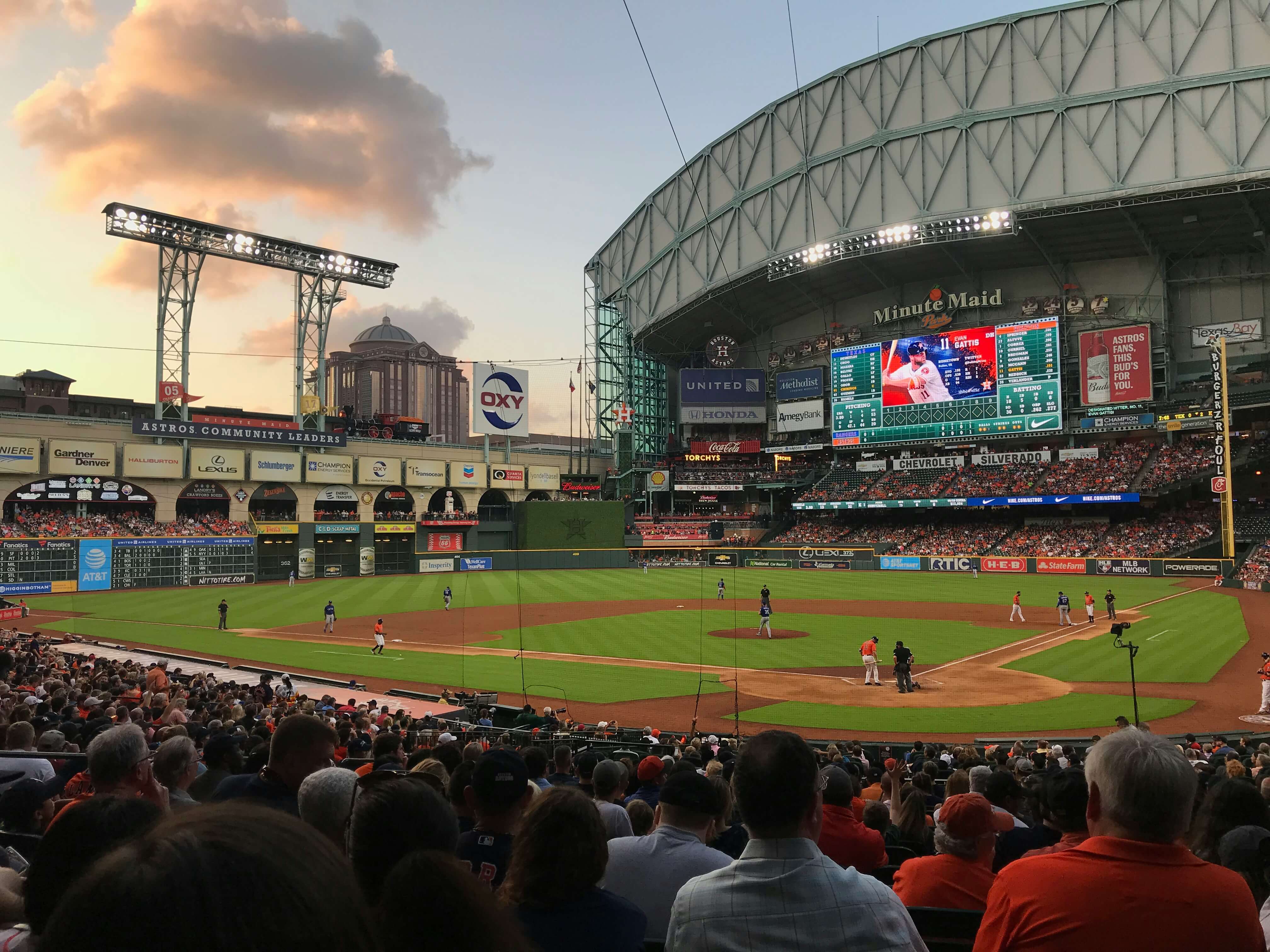
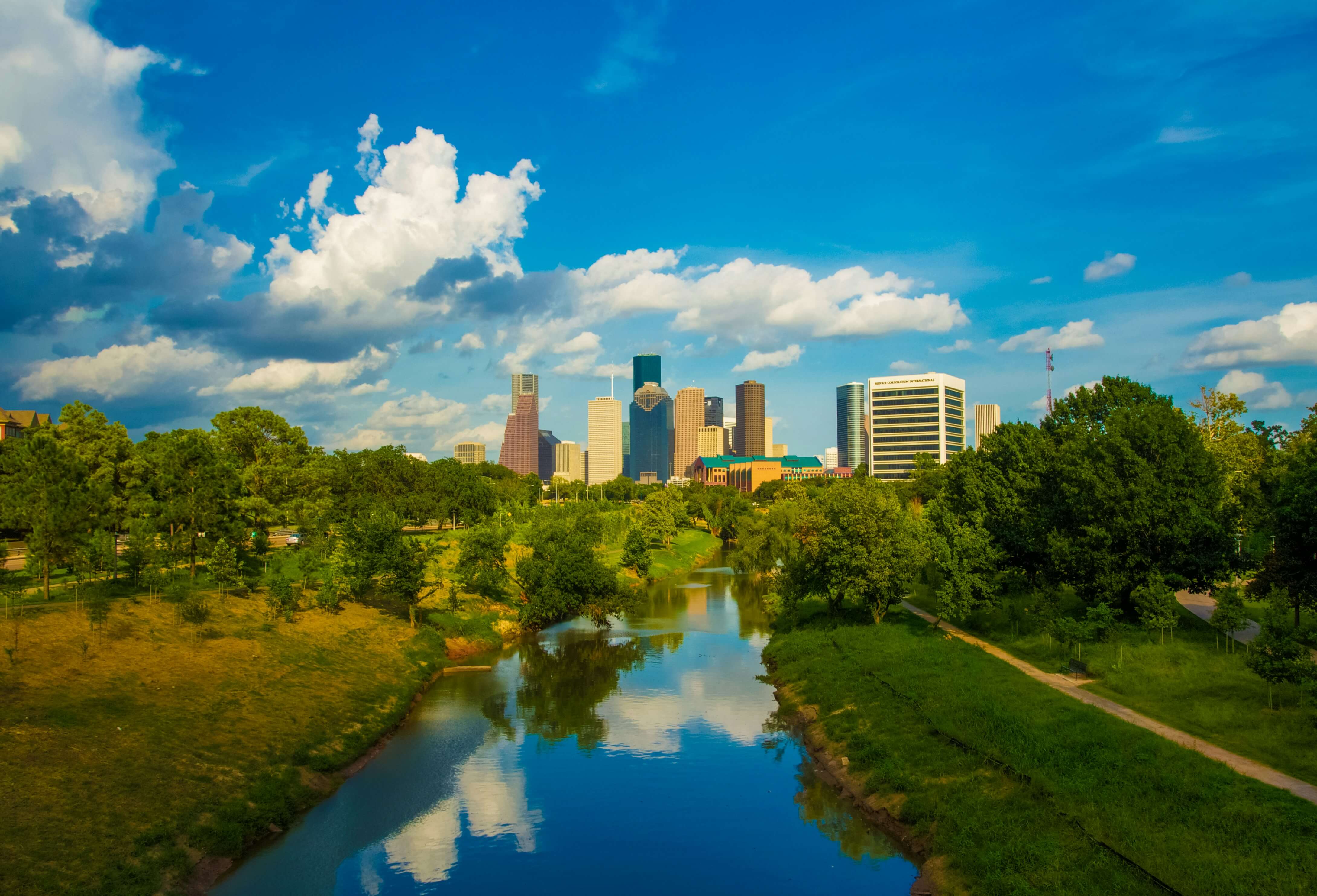
Houston has a reputation — sprawling, car-dependent, freeway-stitched — that’s mostly accurate but misses the real version of the city, which lives in a handful of walkable neighborhoods around the Inner Loop (the 610 freeway ring around the central city). Montrose, Midtown, Downtown, the Heights, and a few other clustered districts have all the food and culture worth the trip, and most of them sit close enough together that a car-free Houston visit is genuinely possible. The version that works picks one of these as a base and treats the highways as the thing you specifically don’t drive.
Houston is a city of pockets, not a city you read end-to-end
The thing visitors get wrong: trying to “see Houston” as one continuous city. The metro area is enormous (about the size of New Jersey), and most of it is suburban sprawl with little to offer a visitor. The interesting Houston is concentrated in a few specific neighborhoods inside the 610 Loop.
Where the city actually lives:
- Downtown — Discovery Green, the theater district, the underground tunnels (yes, real), and the convention hub
- Midtown — METRORail-connected, walkable, dense restaurant and bar density
- Montrose — the cultural center of the city, with the Menil Collection, Rothko Chapel, and the highest walkability rating
- The Heights — Victorian houses, walkable shopping, a slower neighborhood rhythm
- Museum District — Hermann Park, the museum cluster, METRORail-connected
- Rice Village — adjacent to Rice University, walkable shops and restaurants
These are all within about a 10 km radius of downtown. Trying to anchor a Houston trip in Sugar Land, Katy, or The Woodlands is technically possible but misses the city entirely.
Picking a base: five areas, five different versions of the trip
Downtown — Modern, walkable in patches, convention-heavy. Discovery Green is the daytime gravity. METRORail at multiple stations. Tradeoff: most blocks empty out after 6 p.m., and the downtown food scene is thinner than Midtown or Montrose. Strong base for a short business-and-baseball trip or a sights-focused first visit.
Midtown — The best transit-connected residential base. Walking distance to dozens of restaurants and bars, METRORail Red Line at three stations (McGowen, Ensemble/HCC, Wheeler). Tradeoff: fewer hotels than Downtown; some Airbnb-style options. Strong base for a younger or food-focused trip.
Montrose — Houston’s most walkable neighborhood and its cultural anchor. Independent restaurants, galleries, the Menil Collection, Rothko Chapel, and the Buffalo Bayou Park nearby. Hotel options are limited (mostly boutique), but Midtown is a short Uber away. Strong choice for a culture-focused trip.
The Heights — A Victorian-era neighborhood about 6 km northwest of downtown. White Linen Night in August, indie shops, the M-K-T Heights development, walkability inside the neighborhood. Tradeoff: limited transit access — most cross-town trips are by Uber or car. Strong choice for travelers who want a calmer base.
Museum District / Hermann Park — Anchored around the Museum of Fine Arts, the Houston Museum of Natural Science, the Children’s Museum, and Hermann Park itself. METRORail Red Line access. Strong choice for a family trip or a museum-heavy itinerary.
The Galleria area is a major shopping and hotel cluster about 12 km west of downtown — fine for a luxury shopping trip, but it’s car-only and disconnects you from the rest of the city.
Getting around: METRORail, walking inside neighborhoods, and the rideshare default
Houston’s transit is limited, but the lines that do exist cover the most useful visitor stretches.
METRORail. Three lines:
- Red Line — the main artery. Connects Downtown, Midtown, the Museum District, the Texas Medical Center, and NRG Park. The line that does the most for visitors.
- Green Line and Purple Line — east-west across downtown, connecting to EaDo (East Downtown) and the convention center
Fare is $1.25 per ride — among the cheapest in the US.
Walking. Real inside Montrose, Midtown, the Heights, and parts of Downtown. The Buffalo Bayou Park trails connect downtown to Memorial Park (a major urban park).
Rideshare (Uber / Lyft). The default for most cross-neighborhood trips outside METRORail. Affordable by US standards. Surge pricing is real during major events.
Driving. Optional for first-time visitors who stay inside the Loop. Necessary if you want to leave Houston (Galveston, the NASA Space Center, Hill Country day trips).
Tunnels. Downtown has an underground tunnel system connecting many office towers. Air-conditioned, useful for getting between meetings in summer. Mostly closed on weekends and most are inside private buildings.
A reasonable mix: METRORail Red Line for the Museum District and the stadium, walking inside the base neighborhood, Uber for everything else. A rental car is genuinely optional for a 4–6 day Inner Loop trip.
Summer in Houston: humid, hot, and built for AC
June through September daily highs run 30–36°C (mid-80s to high 90s°F) with humidity that pushes felt-temperature regularly above 38°C. This is more punishing than Miami because the heat lasts longer into the evening; nights in July rarely get below 25°C.
What this means for planning:
- AC is non-optional. Every restaurant, museum, hotel, and shop is air-conditioned. The tunnel system downtown was literally built for this.
- Outdoor time happens in the morning (before 10 a.m.) or late evening (after 7 p.m.)
- Afternoon thunderstorms are common from May through September; usually brief but intense
- Pack like Miami, but with one more layer of “intense midday avoidance”
- Hurricane season starts June 1 and peaks August–September. Watch the National Hurricane Center forecast in the week before you fly.
A loose four-day shape that works
This is the rhythm that produces a good first Houston trip.
- Day 1 (arrival): Settle into the base. Walk in the late afternoon (after the heat breaks slightly), low-effort dinner.
- Day 2 (Montrose + Museum District): Menil Collection morning, lunch in Montrose, Museum of Fine Arts in the afternoon. Hermann Park before sunset.
- Day 3 (downtown + Buffalo Bayou): Discovery Green and downtown’s parks, lunch downtown, Buffalo Bayou Park walk or kayak in late afternoon, dinner in EaDo.
- Day 4 (Heights or a side trip): White Linen Night neighborhood walk in the Heights, or a Galveston / NASA day trip with a car rental.
For longer trips, the easy add-ons are Galveston (1 hour south, beach + historic Strand), the NASA Space Center (Johnson Space Center, half-day), or a Hill Country drive to Austin (2.5 hours west).
What disappoints first-time visitors
The honest list:
- The heat is intense. Schedule outdoor time at the day’s edges. Hydrate before you feel thirsty.
- Distances are real. A 6-mile trip across the city can take 30+ minutes in traffic. Plan around traffic windows.
- The downtown tunnels are mostly closed on weekends. They’re useful Monday-Friday business hours, not as a tourist attraction.
- Most US tourist food expectations are wrong here. Houston’s strongest food is Tex-Mex, Vietnamese (one of the largest Vietnamese communities outside Vietnam), and barbecue — not generic American chains. Skip those and you’ll eat well.
- The city sprawls. Trying to see “Houston” without picking a base usually fails.
- Hurricane risk. Low probability but real; pre-check forecasts.
None of this makes Houston a bad trip. It makes it a city that rewards a base inside the Loop, a heat-aware schedule, and the willingness to ignore the highways and stay close to the few walkable cores.
Visiting during the 2026 FIFA World Cup? NRG Stadium hosts seven matches between June 14 and July 4, including a Round of 16 on Independence Day. The stadium has a retractable roof and air conditioning — a real comfort advantage in a Houston summer. The match-day logistics, the METRORail Red Line direct route, and the EaDo Fan Festival sit in a separate piece: Air-Conditioned Football: NRG Stadium at the 2026 World Cup.